

News

Centra Dental
Are you, or your child, the type of person who is excited about getting Houston braces and is looking forward to a brand new smile that can be worn confidently? Perhaps you or your child are worried about whether Houston braces treatment will be painful, especially if either of you has heard horror stories or believes some common myths. In this article, we will address some more myths about dental braces and explain the facts so you can feel more confident before you begin your South Houston braces treatment.
Myth #1: If Houston Braces Move My Teeth, They Must Hurt
We aren’t surprised that this myth is still commonly shared today, since the idea of metal pushing your teeth sounds like it would hurt. However, today braces are far thinner and lighter in weight than they used to be, which has greatly minimized discomfort over the years. Now, regardless of if you choose Invisalign Clear Aligners, ceramic dental braces, or metal dental braces, there will be some minor soreness when you first get them since your teeth aren’t used to them. This will only be temporary though and shouldn’t be intolerable. If it comes down to it, this discomfort is nothing that icing and possibly over-the-counter painkillers can’t alleviate.
After a few days, you will adjust and feel just fine.
Myth #2: After Houston Braces, Your Teeth Will Be Straight For the Rest of Your Life
Although braces do straighten your teeth, all that hard work can be reversed if you don’t follow our recommendations for caring for and maintaining your new smile. This is where retainers come in. Retainers are an orthodontic appliance that must be worn after you finish your Houston braces treatment. We typically tell our patients to wear them all day and all night–except when they’re eating–for at least a year. Afterward, we recommend wearing them every night. This ensures your teeth remain straight and don’t easily become misaligned again.
Myth #3: You Have to Give Up a Lot of Your Favorite Foods When Wearing Dental Braces or Invisalign Clear Aligners
We do recommend you avoid sugary, sticky foods and drinks, as well as crunchy snacks, as this will minimize your risk of cavities and your risk of breaking your braces. Otherwise, you can eat as you normally would, but definitely take smaller bites of your food.
Ready for Houston Braces? Schedule a Consultation With Our South Houston Family Dentist
If you think it’s time for you or your child to begin South Houston braces treatment, then please book an appointment with us so we can begin with a consultation to develop the appropriate treatment plan.
Centra Dental
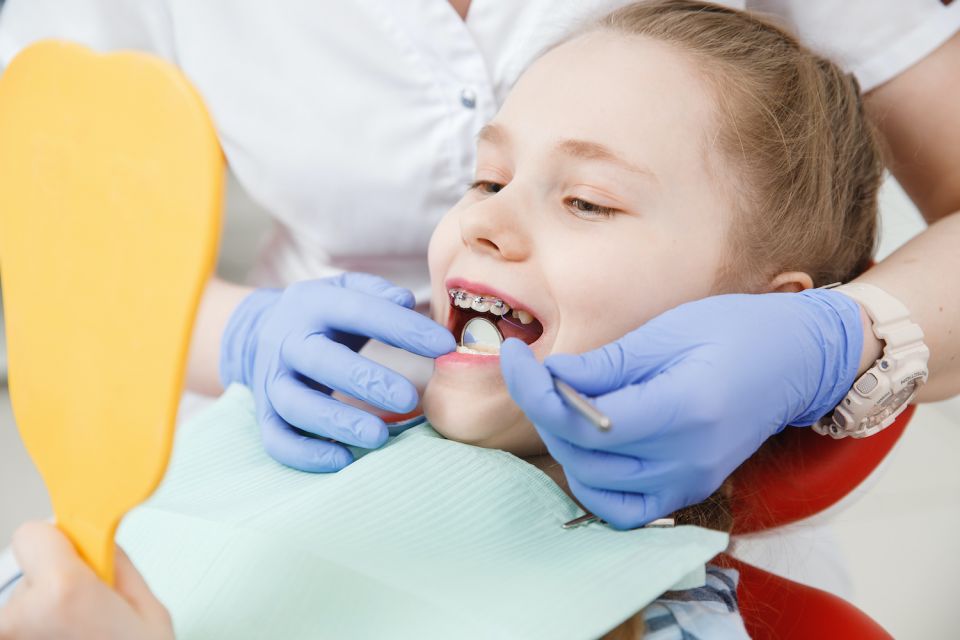
Many of our Houston braces patients are children and young teenagers. Dental braces are essential for good dental health and a healthy bite, otherwise, a variety of problems may occur if you don’t get braces. Prior to treatment, parents often ask our South Houston family dentist what age their child needs to be beforehand. Here is what we advise.
Don’t Wait Until Adulthood to Get Houston Braces
Although it is perfectly acceptable to undergo dental braces treatment as an adult, treatment often lasts longer than it does in children. This is because children’s mouths and heads are still growing, so their teeth are more moldable. Most Houston braces treatments take place between ages 8 and 14 because, by this age, kids should have lost most or all of their baby teeth, but depending on the severity of their malocclusion, we may want to start earlier and set a timeline for you. For example, if their bite is really severe and treatment will take 3 years, you may wish to start at age 10 so that they can be done with their dental braces treatment by age 13 or 14.
Get an Early Houston Braces Evaluation
In many cases, especially if we have been treating you and your child for years and have been able to see how your child’s teeth develop, we might recommend your child comes in for an orthodontic evaluation when they’re around 7 years old. Our trained family dentists will be able to draw conclusions on how the teeth and jaw will develop and if/how braces treatment will help. We will also be able to determine whether interceptive treatment will be necessary, in the event that your child’s malocclusion is one that will likely worsen over time. This involves using orthodontic appliances as an early treatment. In some cases, there won’t be a need for Houston braces once the interceptive treatment has concluded.
Houston Braces For Kids at Centra Dental in South Houston
Dental braces today are much more subtle and comfortable than they used to be, so regardless of which age your child begins treatment, we will determine the type of braces that work best for them to achieve a healthy, straight, and beautiful smile. If you think it might be time for your child to get braces, please book an appointment so we can begin with our consultation.
Centra Dental
Although metal dental braces are by far the most common malocclusion treatment option for our South Houston dentist patients, ceramic braces are growing in popularity–and for good reason. Here is how they compare to metal braces and when we recommend them to our patients.
What Are Ceramic Houston Braces Like?
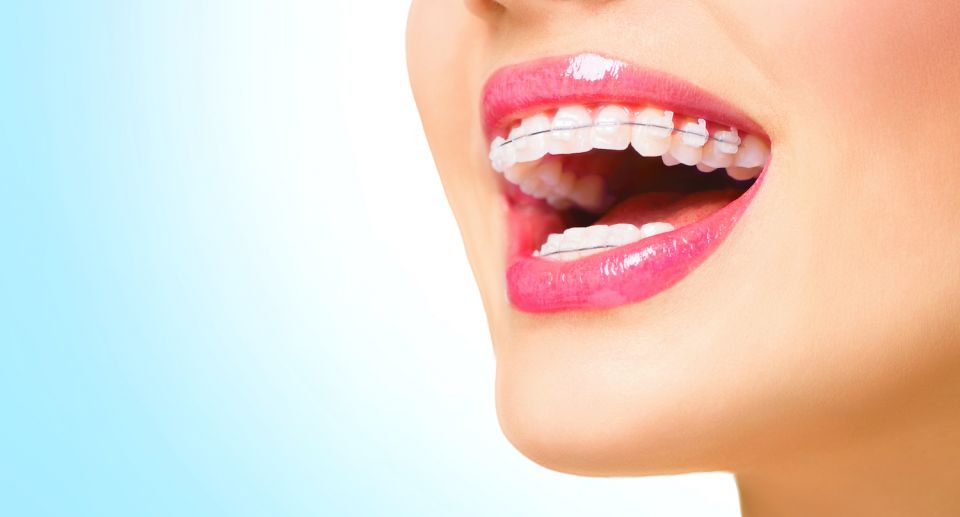
Ceramic dental braces are very similar to metal dental braces, except the brackets that are placed on the teeth are either clear or tooth-colored as opposed to silver.
The archwire, which is placed across the brackets in order to put gradual pressure on them to move the teeth into the correct position, ranges from silver to white, or frosted. This enables the braces to further blend into the teeth for a natural appearance.
When Do Our South Houston Family Dentists Recommend Ceramic Braces
When compared to Invisalign, another method for correcting a malocclusion that we offer at our office in South Houston is Invisalign Clear Aligners, ceramic braces straighten the teeth faster–in about 18 to 36 months. Invisalign can take about a year, and even longer if a patient’s personal case is more complex.
How severe and complicated our patient’s malocclusion is will play a major role in determining which type of Houston braces are the most suitable for their case, so we often recommend metal braces to our patients in need of the most complicated corrections, and recommend ceramic braces to our patients whose bites aren’t severe and are more on the mild to moderate side of the spectrum. Of course, we could also recommend Invisalign in mild-moderate cases, but some patients worry they may lose their Invisalign Clear Aligners or get a bit lazy in their treatment, so they tend to prefer ceramic braces.
In addition to bite correction and patient discipline, we also factor in lifestyle and age. If a patient looking into ceramic braces is an athlete and/or is still a child whose adult teeth haven’t fully emerged, then we may refrain from recommending ceramic Houston braces because they tend to be more fragile than traditional metal Houston braces.
Centra Dental in South Houston Offers Affordable Ceramic Houston Braces
If you would like to correct the alignment of your teeth and think ceramic braces may be right for you, then please book an appointment. We will happily complete an orthodontic evaluation to address your concerns and needs so that we can design the best custom treatment plan for you.

Centra Dental
Houston braces are a good idea if you have a malocclusion, which means your bite isn’t ideal and risks being detrimental to your health. An unideal bite is one that consists of crooked teeth, crowded teeth, extra teeth, or even an overbite or an underbite. Although some of our patients may be familiar with crooked and crowded teeth, others may not know much about overbites and underbites. Here is how they can be identified and what problems arise from them.
Overbite
An overbite often presents itself as “buck teeth” and is one of the most common reasons our south Houston dentist patients need braces. This type of bite occurs in patients whose upper jaw–and consequently, upper teeth–protrude further outward than the bottom jaw and teeth. Now, to be clear, we want some overlap, as this prevents your enamel from wearing abnormally. In doing so, your teeth are stronger and better protected against cavities.
How Does Having an Overbite Affect Your Teeth?
An overbite can easily cause you to have difficulties speaking, much like other malocclusions. Overbites have also been known to cause difficulty with chewing. This is because many of our patients with overbites regularly deal with biting their tongues and cheeks when they try to chew their food. Overbites may also damage your gums and your other teeth because of the improper bite pattern. How severe your overbite is will dictate how severe these side effects are, but thankfully our metal braces and ceramic Houston braces can correct this.
Underbite
A patient has an underbite when their lower teeth tend to protrude outward and are further out than the upper front teeth. You might compare this to a bulldog’s teeth. Because of the abnormal alignment of the teeth, this can cause cosmetic insecurities as well as other dental health problems.
How Does Having an Underbite Affect Your Teeth?
Some underbites are rather minor, but others may be severe. Similar to an overbite, though, the more severe the underbite, the more severe the problems.
Underbites make it harder for you to chew because the jaws are not clasping around food like they are supposed to. Another problem that results from an underbite is that this makes it harder for you to speak properly. The worst issue that can occur is that you experience pain in your mouth and face due to your misaligned jaws. If unaddressed, the pain can worsen and disrupt your day-to-day.
Houston Braces at Centra Dental in South Houston Correct Bad Bites
These are common reasons why our patients need dental braces. If you or your child have a bad bite, then please book an appointment with our South Houston family dentist. We will complete an evaluation to determine which kind of braces are best for your unique case.
