


New Patient? Here’s How Your First Appointment Works
Centra Dental
Quick Answer
Your first dental visit lasts between 45 and 60 minutes and includes a thorough oral examination, low-radiation digital X-rays, professional cleaning, and a customized treatment plan. For younger patients, a specialized kids dental appointment prioritizes gentle acclimatization, preventive fluoride applications, and positive reinforcement to build lifelong health.
Stepping into a dental office for an initial consultation should feel empowering, transparent, and comfortable. Whether you are scheduling an appointment for yourself or introducing your child to professional oral health care for the first time, knowing precisely what will happen eliminates uncertainty and builds lasting confidence.
In clinical practice, well-informed patients experience significantly lower anxiety, feel more in control of their health decisions, and achieve far better long-term oral health outcomes. This guide outlines the complete end-to-end process of an initial appointment for adults, children, and families seeking high-quality dental care.
What Should You Expect During Your First Dental Visit?
A comprehensive first dental visit establishes your baseline oral health. Rather than jumping straight into complex procedures, the initial appointment focuses on gathering accurate health data, performing a complete clinical evaluation, and co-creating a personalized care plan.
Based on standard clinical workflows, a typical initial appointment takes approximately 45 to 60 minutes.
📈 Average Time Allocation During First Dental Visit
20min15min10min5min0min
10min
20min
20min
10min
Patient Registration and Medical History Review
Your health journey begins with a thorough intake process. Systemic health conditions—such as diabetes, cardiovascular disease, hypertension, and autoimmune disorders—directly influence oral hygiene, healing rates, and treatment requirements.
During registration, your care team reviews:
Current prescription medications, over-the-counter supplements, and known allergies
Prior surgical procedures, cardiovascular conditions, and underlying systemic health concerns
Past dental history, previous surgical interventions, or specific dental anxiety triggers
Personal goals, such as cosmetic improvements, bite alignment, or relief from chronic sensitivity
Comprehensive Examination and Digital Diagnostics
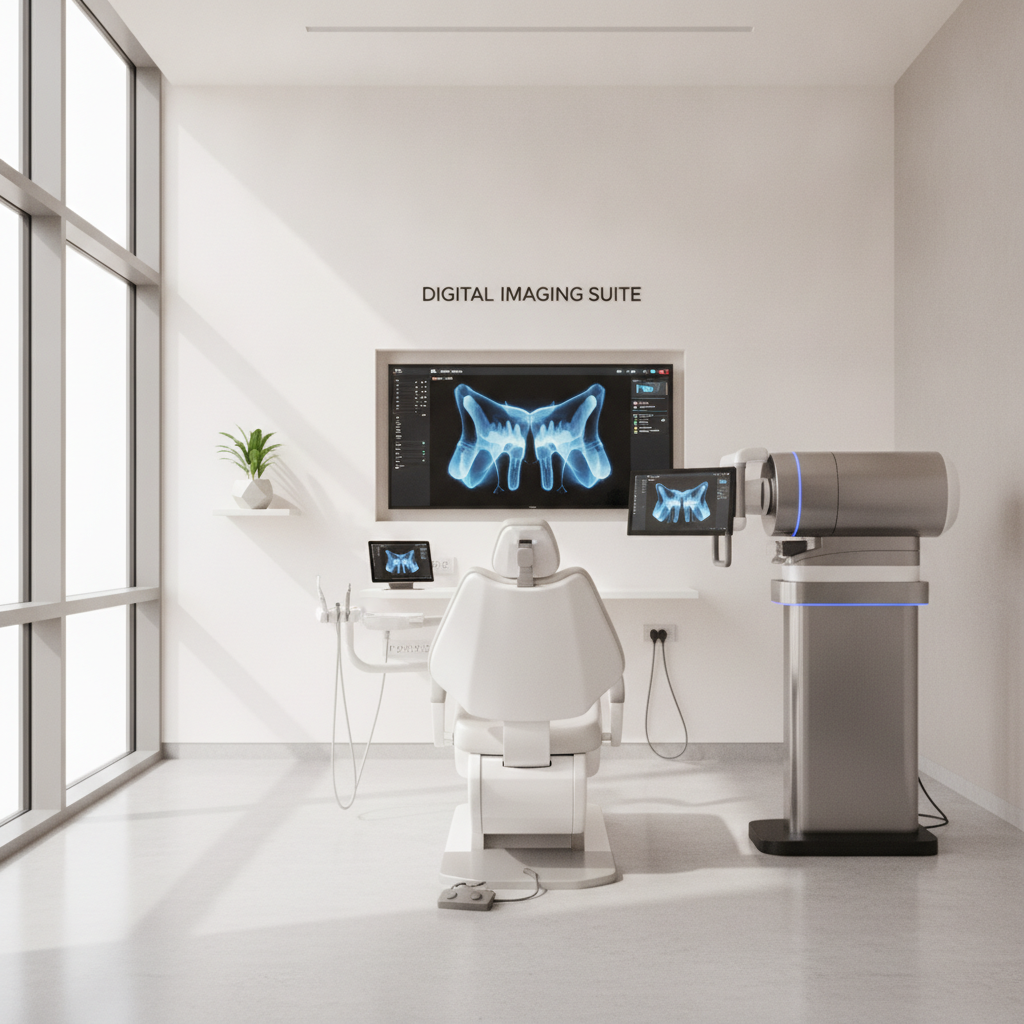
Following intake, your provider performs a detailed clinical evaluation. According to standards established by the American Dental Association (ADA), comprehensive diagnostics require both careful visual inspection and advanced imaging technology.
- 1Digital Radiographs (X-Rays): Low-radiation digital imaging allows clinicians to detect interproximal decay between teeth, evaluate bone density around roots, and inspect underlying tooth structures invisible to the naked eye.
- 2Periodontal Screening: Hygienists measure gum pocket depths around each tooth to screen for early signs of gingivitis or periodontitis, checking for soft tissue inflammation or bone recession.
- 3Oral Cancer Screening: A quick, painless soft-tissue examination checks the tongue, cheeks, floor of the mouth, palate, and throat for unusual lesions, discoloration, or altered tissues.
- 4Occlusal Assessment: Clinicians inspect how your upper and lower teeth align to identify jaw misalignments, uneven wear patterns, or signs of nighttime teeth grinding (bruxism).
"Preventive diagnostics during an initial clinical examination allow us to intercept subtle structural changes before they evolve into costly, invasive dental problems."
How Does a Kids Dental Visit Differ from an Adult Appointment?
Pediatric dentistry requires a unique approach centered on developmental milestones, gentle behavioral guidance, and emotional comfort. When choosing a qualified dentist for kids, parents should expect an environment tailored specifically to young patients and their unique emotional needs.
The American Academy of Pediatric Dentistry (AAPD) recommends that a child's initial kids dental visit occur within six months of their first tooth erupting, or no later than their first birthday.
📊 Parental Satisfaction Indicators for Pediatric Dental Care
96%
92%
94%
98%
Creating a Comfort-First Experience for Children
Children process clinical environments differently than adults. A specialized dentist for kids utilizes "Tell-Show-Do" communication techniques to build trust and eliminate fear:
Tell: The dental team explains each instrument using warm, child-friendly language (e.g., calling the water sprayer a "water squirt gun" or the suction tube a "thirsty straw").
Show: The provider demonstrates how the tool works on a gloved finger or a plush toy so the child understands what it feels and sounds like beforehand.
Do: The provider gently completes the evaluation while providing continuous positive reinforcement, praise, and encouragement.
Preventive Care Tailored for Growing Smiles
A kids dental appointment focuses heavily on prevention, dietary advice, and habit coaching. Clinical staff assess jaw development, monitor primary tooth eruption patterns, and check for speech-impacting structural conditions such as tongue-ties.
Key preventive treatments provided during early pediatric visits include:
Gentle Prophylaxis: Removing soft plaque and surface stains from primary teeth using specialized, extra-gentle polishing tools.
Topical Fluoride Treatment: Applying painted fluoride varnish to reinforce vulnerable enamel against dietary acids and decay.
Dental Sealants: Applying protective, thin resin coatings to the deep grooves of newly erupted permanent molars to seal out food particles and cavity-causing bacteria.
💡 Tip
Parent Tip for Early Appointments: Schedule your child's appointment early in the morning when they are well-rested and alert. Avoid using triggering words like "hurt," "shot," or "drill" at home—let the clinical team introduce equipment using gentle, encouraging terminology.
What Steps Prepare You and Your Family for a Seamless Dental Visit?
Proper preparation ensures your initial visit is efficient, relaxed, and focused entirely on your health goals.

Preparing Documentation and Dental History
To streamline your dental visit, complete your intake forms online before arrival when possible. Having the following items organized helps your provider deliver optimal care right from the start:
Identification and Insurance: Bring a valid state ID, driver's license, and active dental insurance information.
Prior Dental Records: Request your previous provider transfer recent X-rays (taken within the last 12 months) to avoid unnecessary duplicate imaging.
Medication List: Bring an updated list of all prescription medications, over-the-counter supplements, and precise dosages.
Framing the Visit Positively for Young Children
A successful kids dental visit begins with thoughtful preparation at home. Parents can prepare young children by using simple, supportive routines:
"Children mirror parental emotions. Frame your upcoming dental appointment as a routine, positive milestone—similar to getting a haircut or trying a fun new activity."
Read Children's Books: Choose storybooks featuring popular characters visiting the dentist to familiarize your child with the clinical setting.
Role-Play at Home: Practice sitting in a chair, counting each other's teeth with a toothbrush, and shining a soft flashlight gently on teeth.
Keep Descriptions Simple: Explain that the dental team will count, clean, and shine their smile to keep their teeth strong and healthy.
What Happens After Your Initial Appointment?
At the conclusion of your first dental visit, your clinician synthesizes diagnostic data to present a clear, transparent summary of your oral health.
```
Initial Diagnostics ──► Assessment & Diagnosis ──► Personalized Care Plan ──► Preventive Maintenance
```
If your teeth and gums are healthy, your provider will schedule your next routine preventive cleaning and examination for six months out. If clinical issues are detected—such as active decay, worn restorations, or periodontal disease—your dentist will present a prioritized care plan.
This treatment plan outlines:
Immediate clinical priorities versus elective or preventive recommendations
Estimated timelines and the expected number of appointments required
- Clear cost estimates, insurance coverage breakdowns, and flexible payment options
By committing to regular preventive care, families can preserve their natural smiles, prevent sudden tooth pain or financial surprises, and maintain excellent systemic health for years to come.
Your Comfort Comes First—Let’s Take the First Step Together
Whether you are due for a routine checkup, seeking gentle pediatric care for your child, or returning for a dental visit after a long break, our compassionate clinical team is dedicated to listening carefully and supporting your individual goals. We strive to make every appointment a peaceful, positive experience tailored entirely to your family's needs. Contact Centra Dental today to schedule your consultation, explore our comprehensive range of dental services, and take the first step toward a lifetime of healthy, confident smiles.
