

Can a Laser Treatment Really Help Stop Snoring?
Centra Dental
Snoring is common, and sleep-medicine guidance treats it as more than a bedroom nuisance because it can also be a warning sign of obstructive sleep apnea (OSA). American Academy of Sleep Medicine materials cite snoring in up to 30 to 50 percent of adults over age 50 and recommend evaluating symptoms such as loud snoring, witnessed breathing pauses, choking or gasping, and excessive daytime sleepiness when OSA is suspected.
For anyone researching a laser snoring treatment near me, the safest starting point is to determine whether the problem is primary snoring or part of a sleep-related breathing disorder before choosing treatment. Centra Dental’s advanced snoring treatment options might just be the first step toward a quieter, more restful night.
Why So Many People Snore Without Realizing the Cause
Snoring occurs when airflow makes relaxed tissues in the upper airway vibrate during sleep. The exact source can vary from person to person and may involve the soft palate, tongue position, nasal obstruction, jaw anatomy, body weight, alcohol or sedative effects, or sleep position.
Not everyone who snores has OSA, but snoring by itself cannot reliably rule OSA in or out. That is why a treatment aimed mainly at reducing tissue vibration should follow an evaluation of symptoms and risk factors rather than being treated as a universal fix.
How Laser Treatment Targets the Underlying Tissue
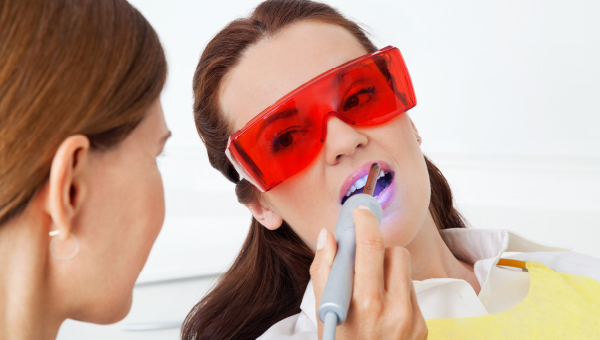
NightLase uses a non-ablative Er:YAG laser to heat selected oral tissues without cutting them, with the goal of changing tissue tone and reducing snoring vibration. A 2020 systematic review of seven studies involving 247 participants found significant improvement in patient-reported snoring scores after two to three sessions, but did not find significant changes in apnea-hypopnea index or respiratory disturbance index (Neruntarat et al., 2020). A small randomized controlled trial published in 2023 also found better snoring-related scores with NightLase than with sham treatment in selected adults with primary snoring or mild sleep-disordered breathing (Picavet et al., 2023).
Non-Surgical Snoring Treatment vs. Other Common Options
| Approach | How It Works | Recovery Time |
|---|---|---|
| Laser treatment (e.g., NightLase) | Non-ablative heating of selected oral tissues to reduce snoring vibration in appropriate adults | Minimal in published studies |
| CPAP machine | Uses positive air pressure to keep the airway open; established treatment for many OSA patients | No procedural recovery; nightly device use required |
| Oral appliance therapy | Repositions the jaw or tongue to improve airway space in selected snoring or OSA patients | No procedural recovery; adjustment period may be needed |
| Surgical procedures | Anatomy-specific procedures that remove, reposition, or restructure tissue in selected cases | Days to weeks, depending on procedure |
This comparison matters for anyone searching for a snoring treatment without CPAP, because these options are not interchangeable. CPAP is an established treatment for OSA and keeps the airway open with positive pressure; oral appliances can be appropriate for selected snoring or OSA patients; and laser treatment has evidence for reducing snoring in selected adults but has not been shown to normalize OSA measures consistently. A person who cannot tolerate CPAP should discuss evidence-based alternatives with a qualified sleep clinician rather than assuming a snoring-reduction procedure treats the underlying apnea.
Who Tends to See the Best Results
Published NightLase studies have generally involved selected adults rather than every type of snorer. The 2023 randomized trial, for example, enrolled adults with an apnea-hypopnea index below 15 events per hour and a body mass index of 30 or less, so its results should not be generalized to moderate or severe OSA or to every airway anatomy (Picavet et al., 2023). A clinical evaluation matters because enlarged tonsils, major nasal obstruction, jaw anatomy, obesity, or other contributors may call for a different treatment pathway or sleep-medicine referral.
Snoring Doesn't Automatically Mean Sleep Apnea, But It's Worth Ruling Out
The American Academy of Sleep Medicine states that OSA and primary snoring are medical diagnoses and that diagnostic testing should be tied to a comprehensive sleep evaluation. Persistent snoring is especially important to discuss with a medical provider when it comes with witnessed pauses in breathing, choking or gasping, morning headaches, unrefreshing sleep, or excessive daytime sleepiness (AASM, 2025). Reducing the sound of snoring is not the same as proving that OSA has been treated, so suspected apnea should be evaluated before or alongside a procedure aimed at snoring.
How Centra Dental Approaches Snoring Treatment
Centra Dental offers NightLase as a non-invasive laser option for reducing snoring and describes the visit as beginning with a consultation about sleep and airway concerns. The evidence supports presenting NightLase as a snoring-reduction option for selected patients, not as a universal substitute for CPAP or a stand-alone treatment for confirmed OSA. If symptoms suggest a more significant sleep-breathing disorder, referral for medical or sleep evaluation should be part of the plan before relying on laser treatment alone.
If the snoring you are concerned about belongs to a child rather than an adult, Centra Dental's HealthyStart page addresses pediatric dental and airway development specifically; children require a different evaluation pathway than adult primary snoring patients. You can also browse Centra Dental's full range of dental services to see how airway-focused care fits alongside the rest of your oral health treatment.
If snoring has become a nightly disruption for you or your household, schedule a consultation with Centra Dental to discuss whether NightLase may be appropriate and whether your symptoms should also be evaluated for sleep apnea.
Sources
Lasers in Medical Science. "Er:YAG Laser for Snoring: A Systematic Review and Meta-Analysis." 2020.
European Archives of Oto-Rhino-Laryngology. "Treatment of Snoring Using a Non-Invasive Er:YAG Laser with SMOOTH Mode (NightLase): A Randomized Controlled Trial." 2023.
American Academy of Sleep Medicine. "Clinical Use of a Home Sleep Apnea Test: An Updated Position Statement." 2025.
American Academy of Sleep Medicine. "Clinical Practice Guideline for Diagnostic Testing for Adult Obstructive Sleep Apnea."
Centra Dental. "Houston NightLase."
